
Moving to Roanoke, VA? You are heading to one of the most livable small cities in Virginia: a mountain valley with a walkable downtown, easy access to the Blue Ridge Parkway, a major health system and a friendly, unhurried pace. This guide from Collegiate Movers, a Roanoke moving company that has helped families settle in the valley since 1999, covers what to know before moving to Roanoke, VA: neighborhoods, nearby towns, getting around, schools, utilities, weather and how to plan the move itself.
Ready to plan your move? Call (540) 992-1414, Monday to Saturday from 7am to 7pm, or request a free quote online.
Why People Are Moving to Roanoke, VA
- The outdoors on your doorstep. The Blue Ridge Parkway, the Appalachian Trail, Smith Mountain Lake and miles of greenways are a short drive away.
- A real downtown. The historic Roanoke City Market, restaurants, breweries, theaters and museums are all within walking distance of each other.
- Strong healthcare and education. Carilion Clinic is based in Roanoke, and the Virginia Tech Carilion School of Medicine is downtown. Virginia Tech, Roanoke College, Hollins University and Radford University are all nearby.
- A slower pace. Many people moving to Roanoke, VA come from larger metro areas and enjoy shorter commutes, less traffic and a strong sense of community.
- Four real seasons, with milder winters than the northern states and spectacular fall color.
Getting to Know the Roanoke Valley
Roanoke sits in a valley between the Blue Ridge Mountains and the ridges of the Alleghenies, along the Roanoke River. It is often called the Star City of the South, after the illuminated Mill Mountain Star that overlooks downtown. The Roanoke Valley includes the City of Roanoke, the City of Salem, the Town of Vinton, Roanoke County and the nearby communities of Botetourt County. When people talk about moving to Roanoke, VA, they often mean anywhere in this valley.
Roanoke Neighborhoods to Know
Every neighborhood has its own character. Visit a few at different times of day before you choose. These are some of the areas newcomers ask us about most often.
Downtown Roanoke
Lofts and apartments above shops and restaurants, close to the City Market, the Taubman Museum of Art and the Center in the Square. A good fit if you want to walk to dinner and events.
Grandin Village and Raleigh Court
Tree-lined streets, older homes with front porches and a small business district with the historic Grandin Theatre, a co-op grocery and local cafes. Close to the Roanoke River Greenway.
South Roanoke
Established residential streets near the foot of Mill Mountain, with larger older homes and quick access to downtown and Carilion Roanoke Memorial Hospital.
Old Southwest
One of the city’s historic districts, with Victorian homes and a close-knit neighborhood feel, a short walk from downtown.
Wasena
A small neighborhood along the river with parks, greenway access and a growing number of local businesses.
Cave Spring and Southwest Roanoke County
Suburban neighborhoods with larger lots, shopping along Route 419 and easy access to the Blue Ridge Parkway. Popular with families.
Hollins and North Roanoke County
Quieter suburban areas near Hollins University and the airport, with quick access to I-81.
Moving within the valley? Our Roanoke County movers know these neighborhoods well, including the steep driveways and tight streets that some older areas are known for.
Nearby Towns Worth a Look
- Salem: an independent city next to Roanoke with its own school system, Roanoke College and a historic Main Street.
- Vinton: a small town on Roanoke’s east side with a friendly, close-knit feel.
- Daleville and Troutville: in Botetourt County, north of Roanoke along I-81, with newer neighborhoods and a more rural setting.
- Blacksburg and Christiansburg: about 45 minutes away in the New River Valley, home to Virginia Tech.
- Lynchburg: about an hour east, another option for those working between the two cities.
Getting Around Roanoke
Most people moving to Roanoke, VA drive. Interstate 81 runs along the west side of the valley, and I-581 connects it to downtown. Commutes within the valley are usually short compared with larger cities.
- Air: Roanoke-Blacksburg Regional Airport (ROA) is a few minutes from downtown, with connecting flights to major hubs.
- Rail: Amtrak’s Northeast Regional serves downtown Roanoke, with service toward Washington, D.C. and the Northeast.
- Bus: Valley Metro runs local bus routes, and the Smart Way bus connects Roanoke with Blacksburg and Christiansburg.
- Greenways: the Roanoke River Greenway and connecting trails link many neighborhoods for walking and biking.
Schools in the Roanoke Valley
For families moving to Roanoke, VA, schools are often the first question. The valley has several separate public school systems, and which one serves your home depends on the exact address, not just the mailing city. Roanoke City Public Schools, Roanoke County Public Schools, Salem City Schools and Botetourt County Public Schools are separate districts. If schools matter to your decision, check the school boundary for each home you consider before you sign. Private and faith-based schools are also available across the valley.
For higher education, the area includes Roanoke College, Hollins University, Virginia Western Community College and the Virginia Tech Carilion School of Medicine, with Virginia Tech and Radford University a short drive away.
Weather and Seasons
The weather is one of the reasons people enjoy moving to Roanoke, VA. Roanoke has four distinct seasons. Summers are warm and can be humid, winters are generally milder than in the northern states with occasional snow, and spring and fall are long and pleasant. Fall color along the Blue Ridge Parkway draws visitors from across the region. If you are planning when to arrive, our guide to the best time of year to move compares every season.
Things to Do After Moving to Roanoke, VA
- Mill Mountain and the Roanoke Star: drive or hike to the overlook for a view of the whole valley.
- Blue Ridge Parkway: scenic drives, overlooks and trailheads minutes from the city.
- McAfee Knob: one of the most photographed spots on the Appalachian Trail, in Roanoke County.
- Roanoke River Greenway: miles of paved trail for walking, running and biking.
- Historic City Market: local produce, food and shops downtown.
- Museums: the Taubman Museum of Art, the Virginia Museum of Transportation and the Science Museum of Western Virginia.
- Smith Mountain Lake: boating, swimming and lakeside dining about an hour away.
Your Moving to Roanoke, VA Checklist
Eight Weeks Before
- Visit neighborhoods and check school boundaries if they matter to you.
- Request written estimates from movers and confirm their USDOT registration.
- Start sorting what you will keep, sell or donate.
Four to Six Weeks Before
- Book your moving date and reserve elevators or loading areas at both homes.
- Start packing rooms you use least. See our packing guide.
- Arrange records transfers for schools, doctors and veterinarians.
Two Weeks Before
- Schedule utility start dates at your new home.
- Update your address with the USPS, your bank, employer and insurance.
- Confirm the details with your moving company.
Moving Week
- Finish packing and pack an essentials bag for the first night.
- Empty and defrost the refrigerator and freezer.
- Walk through the old home before the truck leaves.
Setting Up Utilities in Roanoke
Utility providers depend on your exact address, so confirm each one with your landlord, real estate agent or the provider before moving day. In much of the valley, electricity is provided by Appalachian Power, natural gas by Roanoke Gas, and water and sewer by the Western Virginia Water Authority. Internet providers vary by street, so check availability for your address early, especially if you work from home.
Driver’s License, Vehicle and Voter Registration
If you are moving to Roanoke, VA from another state, plan to transfer your driver’s license and register your vehicle with the Virginia DMV soon after you arrive. The DMV sets specific deadlines for new residents, so check the current rules at dmv.virginia.gov. You can register to vote at the same time or online through the Virginia Department of Elections. Your city or county will also handle local personal property tax on vehicles.
Moving to Roanoke, VA From Out of State
Long distance moves need more planning than local ones. Get written estimates early, ask how the price is calculated, and confirm the pickup date and delivery window in writing. Our guides on what to look for in long distance movers and how long a cross-country move takes cover what to expect. Collegiate Movers handles long distance moves to and from the Roanoke Valley.
How Much Does It Cost to Move to Roanoke?
The cost depends on how much you are moving, the distance and the services you choose. Local moves with Collegiate Movers start from $350, and long distance moves are priced by weight and distance. Our guide How Much Do Movers Cost in Roanoke, VA? explains the factors and how to keep the price down.
Moving to Roanoke, VA: Local Moving Tips
The valley’s geography shapes moving day. Many Roanoke homes sit on hillsides, with steep driveways, long front steps or narrow streets where a large truck cannot park close to the door. Older neighborhoods such as Old Southwest, South Roanoke and Grandin often have tight stairways and smaller doorways that need careful planning for large furniture. Tell your movers about these details when you ask for an estimate, so they bring the right crew and equipment.

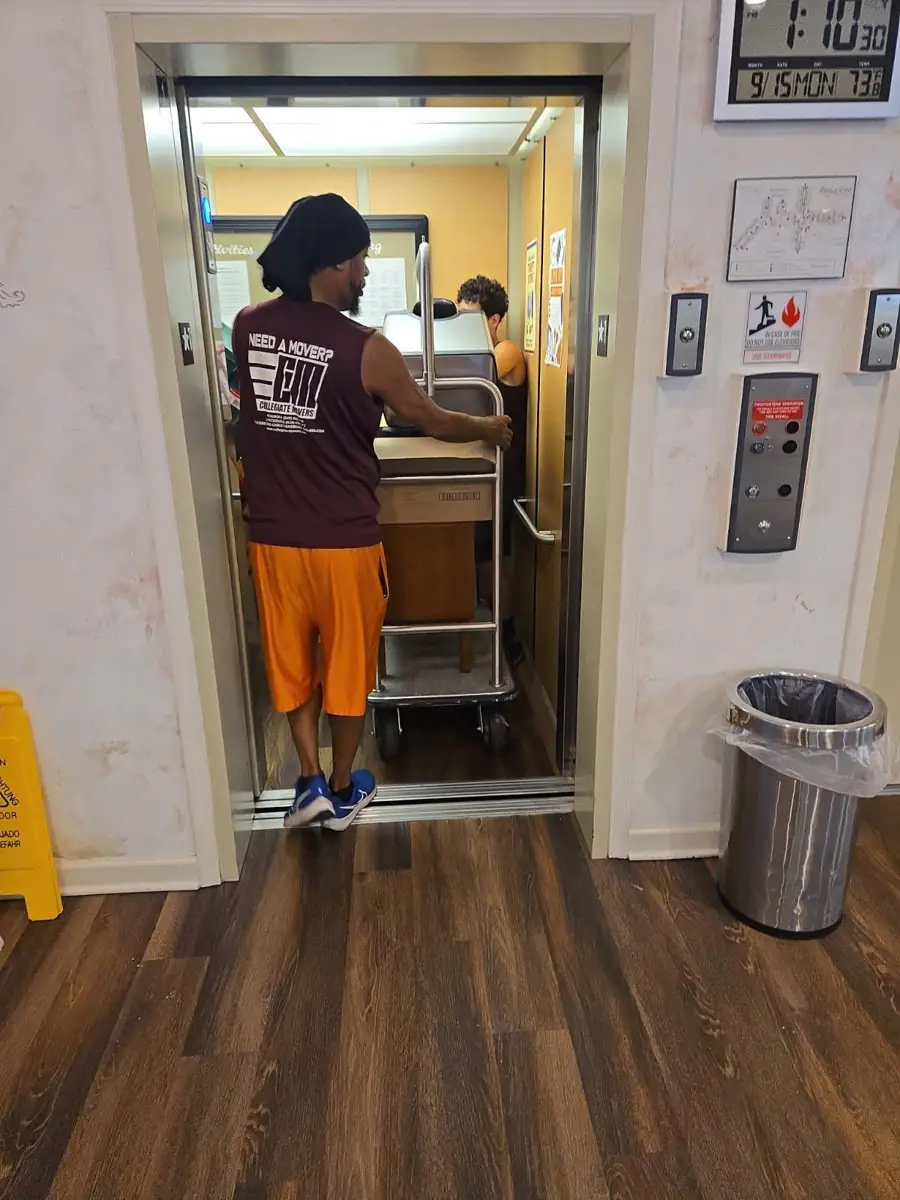
- Apartments downtown: reserve the elevator and loading area, and ask about move-in hours.
- Hillside homes: clear the driveway and point out any steps or uneven paths.
- Winter moves: keep walkways salted and plan a backup date in case of snow or ice.
- Summer moves: start early in the day to avoid the afternoon heat.
Moving to Roanoke, VA into an apartment? Our crews handle elevators, stairwells and parking lots every week. See our same day movers if your timeline is tight, or our moving labor service if you are driving your own truck.
Living in Roanoke: What Newcomers Say
People who have recently moved to the valley often mention the same things: how quickly they found a favorite trail, how easy it is to get across town, and how friendly their neighbors are. Living in Roanoke means farmers market mornings, evenings on the greenway and weekends on the Blue Ridge Parkway. Many newcomers also say they wish they had explored more Roanoke neighborhoods before choosing a home, so take your time and visit several.
Tips for Your First Weeks in Roanoke
- Unpack the kitchen and bedrooms first, so daily life feels normal quickly.
- Walk or drive your new neighborhood at different times of day.
- Find your nearest urgent care, pharmacy and grocery store before you need them.
- Visit the City Market on a weekend morning to meet local vendors.
- Join a neighborhood group, a church, a running club or a volunteer project to meet people.
- Take a drive on the Blue Ridge Parkway on your first clear weekend.
Renting vs. Buying After Moving to Roanoke
Many people moving to Roanoke, VA rent for the first few months while they learn the neighborhoods. Renting gives you time to see where you like to spend your time, how long your commute really is and which school boundaries matter to you. When you are ready to buy, a local real estate agent can explain each area’s strengths, the age and condition of the homes and the difference between city and county taxes.
If you do rent first, plan for two moves: one into the rental and one into your permanent home. Keeping your belongings organized and well labeled makes the second move much faster. Some newcomers put part of their belongings in storage until they buy.
Working in Roanoke
Healthcare is one of the largest parts of the local economy, led by Carilion Clinic and other medical providers. Education, manufacturing, transportation, retail, hospitality and a growing number of small businesses round out the job market. Remote work has also brought many new residents to the valley, drawn by outdoor access and shorter commutes. If you are moving to Roanoke, VA for a new job, ask your employer about relocation support, which sometimes covers part of the moving cost.
Moving to Roanoke, VA With Kids
- Check the school district and the specific school for each address before signing a lease or contract.
- Ask the new school which records and immunization documents it needs, and request them early.
- Find parks, libraries and youth sports near your new home before the move, so kids have something to look forward to.
- Pack a box of favorite toys, books and bedding to open first.
- Set up the children’s rooms first, so they feel at home quickly.
Moving to Roanoke, VA With Pets
- Update your pet’s microchip and ID tag with your new address and phone number.
- Check local licensing rules with the City of Roanoke or your county.
- Find a new veterinarian and transfer records before you arrive.
- On moving day, keep pets in a quiet room or with a friend, away from open doors.
- Walk new routes with dogs on a leash until they know the neighborhood.
Retiring in Roanoke
Roanoke is a popular choice for retirees who want healthcare close by, a walkable downtown, cultural events and mountain scenery without the cost and traffic of a larger city. Many retirees moving to Roanoke, VA choose single-level homes, condominiums or senior communities. Our moving services for seniors help with downsizing, packing and setting up the new home at a comfortable pace.
Is Moving to Roanoke, VA Right for You?
Roanoke suits people who want access to the mountains, a manageable cost of living compared with many larger metros, shorter commutes and a community where it is easy to get involved. If you need a big-city job market in your field, check local opportunities first, or consider remote work. Many newcomers find that moving to Roanoke, VA gives them more time outdoors and more time with family.
Frequently Asked Questions
Is Roanoke, VA a good place to live?
Many residents value Roanoke for its outdoor access, walkable downtown, healthcare employers, colleges and friendly pace. The best way to decide is to visit a few neighborhoods and spend a weekend in the valley.
What is the best neighborhood in Roanoke?
It depends on what you want. Downtown suits people who want to walk to restaurants and events, Grandin Village and South Roanoke offer older homes on tree-lined streets, and Cave Spring and Salem are popular with families who want more space.
How far is Roanoke from Blacksburg?
About 45 minutes by car, via I-81. The Smart Way bus also connects the two.
Does it snow in Roanoke, VA?
Yes, Roanoke gets some snow most winters, but winters are generally milder than in the northern states. Most snow melts within a few days.
When is the best time to move to Roanoke?
Spring and early fall offer the most comfortable weather. Summer is the busiest moving season, so book early if you plan to move then.
Do you move people to Roanoke from other states?
Yes. Collegiate Movers handles long distance moves to and from the Roanoke Valley. Call for a written estimate.
Plan Your Move With Collegiate Movers
Whether you are moving to Roanoke, VA from across the country or across town, Collegiate Movers can help. We have served the Roanoke Valley since 1999 with our own trucks, trained crews and written estimates. Call (540) 992-1414, Monday to Saturday from 7am to 7pm, or request your free quote online. Explore our local moving company services and the areas we serve.