
Knowing what to look for in long distance movers is the best way to protect your belongings, your budget and your moving date. A long move puts everything you own on a truck for days or even weeks, so the company you choose matters more than on any local move. This guide from Collegiate Movers, a Roanoke, VA moving company serving families since 1999, walks you through the checks, questions and warning signs to use when you compare long distance movers.
Planning a move from Roanoke or Southwest Virginia? Our long distance movers are happy to answer every question on this list. Call (540) 992-1414, Monday to Saturday from 7am to 7pm.
Quick Checklist: What to Look for in Long Distance Movers
- A valid USDOT number you can look up yourself
- A real business address and a working local phone number
- A written estimate based on your actual belongings
- Clear information about valuation coverage and claims
- Honest, recent reviews from real customers
- No large cash deposit demanded before the move
- A written pickup date and delivery window
- Straight answers to your questions
Each point is explained in detail below.
1. Check Licensing and Registration
Long distance movers that carry household goods across state lines must be registered with the US Department of Transportation. Registered movers have a USDOT number, and interstate household goods movers also need operating authority from the Federal Motor Carrier Safety Administration (FMCSA). You can look up any mover’s registration on the FMCSA website before you book.
Collegiate Movers is licensed and insured, USDOT 861003. Ask every company you are considering for its numbers, then check them. If a mover cannot or will not give you a USDOT number, keep looking.
2. Make Sure the Company Is Real and Local
Moving scams often hide behind slick websites with no physical address. Good long distance movers have a real office, real trucks and a phone number answered by real people. Look for:
- A street address you can find on a map
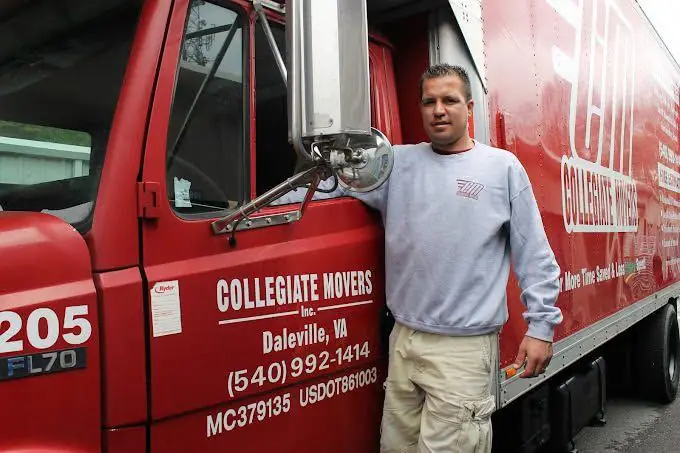
- Company trucks with the business name and USDOT number on the door
- A local phone number, not only a toll-free line or a web form
- A history in your community, such as years in business and local reviews
Collegiate Movers is based at 84 Executive Cir, Roanoke, VA 24012, and has served the Roanoke Valley since 1999.
3. Know the Difference Between a Mover and a Broker
Some companies that advertise as long distance movers are actually brokers. A broker sells your move and then hires another company to carry it out. Brokers are legal when they are properly registered, but you may not know who will actually show up at your door. Ask directly: “Will your own crew and your own trucks handle my move?” If the answer is no, ask for the name and USDOT number of the company that will.
4. Get a Written Estimate Based on Your Belongings
An accurate estimate is one of the most important things to look for in long distance movers. A reliable estimate is based on what you are actually moving, through an in-home walk-through, a video survey or a detailed inventory. Be careful with quotes given in a few seconds over the phone without any questions about your home.
For interstate moves, federal rules describe different types of estimates:
- Non-binding estimate: an approximate cost. The final price is based on the actual weight of your shipment and the services provided.
- Binding estimate: a fixed price for the items and services listed. If you add items or services, the price can change.
- Binding not-to-exceed estimate: you pay the lower of the estimate or the actual cost, as long as you do not add items or services.
Ask each company which type of estimate it provides and make sure everything is in writing.
5. Understand Valuation Coverage
Valuation coverage determines how much the mover is responsible for if something is lost or damaged. Under federal rules for interstate moves, movers must offer two levels:
- Released value protection: basic coverage included at no extra cost, which pays a set amount per pound per item. It is often far less than an item’s real value.
- Full value protection: the mover is responsible for the replacement value of lost or damaged goods, up to limits in your agreement. It costs more, but it offers much better protection.
Ask long distance movers to explain the options in plain language before you sign, and consider whether your homeowner’s or renter’s insurance covers anything during the move.
6. Read Reviews the Smart Way
Reviews tell you how long distance movers treat customers when things go right and when they go wrong. When you read them:
- Look at reviews on more than one site, such as Google and the Better Business Bureau.
- Focus on recent reviews from the past one or two years.
- Watch how the company responds to complaints. Calm, helpful replies are a good sign.
- Be cautious of a company with only perfect reviews posted in a short burst.
You can read what customers say about us on our reviews page.
7. Watch Out for Red Flags
The FMCSA warns consumers about common moving scams. Avoid long distance movers that:
- Demand a large cash deposit before the move
- Give an estimate without asking about your belongings
- Have no address, no USDOT number or a different company name on the paperwork
- Ask you to sign blank or incomplete documents
- Do not provide the federal booklet Your Rights and Responsibilities When You Move for an interstate move
- Show up with a rental truck instead of a company truck
- Raise the price after your belongings are loaded and refuse to unload until you pay more
The FMCSA’s Protect Your Move website explains these warning signs and your rights in detail.
8. Ask About Pickup Dates and Delivery Windows
Long distance movers usually give you a pickup date and a delivery window, a range of days when your belongings will arrive. Ask how the window works, how you will be contacted before delivery and what happens if you are not available. Get the dates in writing so you can plan your own travel. Our guide How Long Does a Cross-Country Move Take? explains delivery windows in more detail.
9. Ask How Claims Are Handled
Even careful long distance movers occasionally have an item damaged. What matters is how the company handles it. Ask:
- How do I report damage or a missing item?
- How long do I have to file a claim? For interstate moves, federal rules generally allow nine months from delivery.
- How long does the company take to respond and resolve claims?
- Is there a dispute settlement or arbitration program if we disagree?
Before you sign the delivery paperwork, note any visible damage or missing boxes on the inventory.
10. Compare at Least Three Long Distance Movers
Get written estimates from at least three long distance movers and compare them side by side. Look beyond the bottom line:
- Is each estimate based on the same list of belongings and services?
- What type of estimate is it?
- Which valuation coverage is included and what does more coverage cost?
- Are packing materials, stairs, long carries or elevators included or extra?
- What are the pickup date and delivery window?
The lowest price is not always the best value. An estimate that is much lower than the others can be a warning sign.
Questions to Ask Long Distance Movers Before You Book
- What is your USDOT number, and are you the carrier or a broker?
- How long have you been in business?
- Will your own employees pack, load and drive my belongings?
- What type of estimate are you giving me, and what could change the price?
- What valuation coverage is included, and what are my other options?
- What is my pickup date and delivery window?
- How will you keep me updated during the move?
- How much is the deposit, and how do I pay?
- How do I file a claim if something is damaged?
- Can you give me a written copy of everything we discussed?
Why Experience Matters for a Long Move
Experienced long distance movers know how to pack for the road, load a truck so nothing shifts and plan a route around weather and traffic. They also know the paperwork, which protects you if something goes wrong. When you compare companies, ask how many years they have been moving families and whether the same crew handles packing and loading. A company with deep roots in its community has a reputation to protect and every reason to treat your move with care.
How Collegiate Movers Answers These Questions
We think every customer deserves straight answers. Here is how we measure up to this checklist:
- Registration: licensed and insured, USDOT 861003.
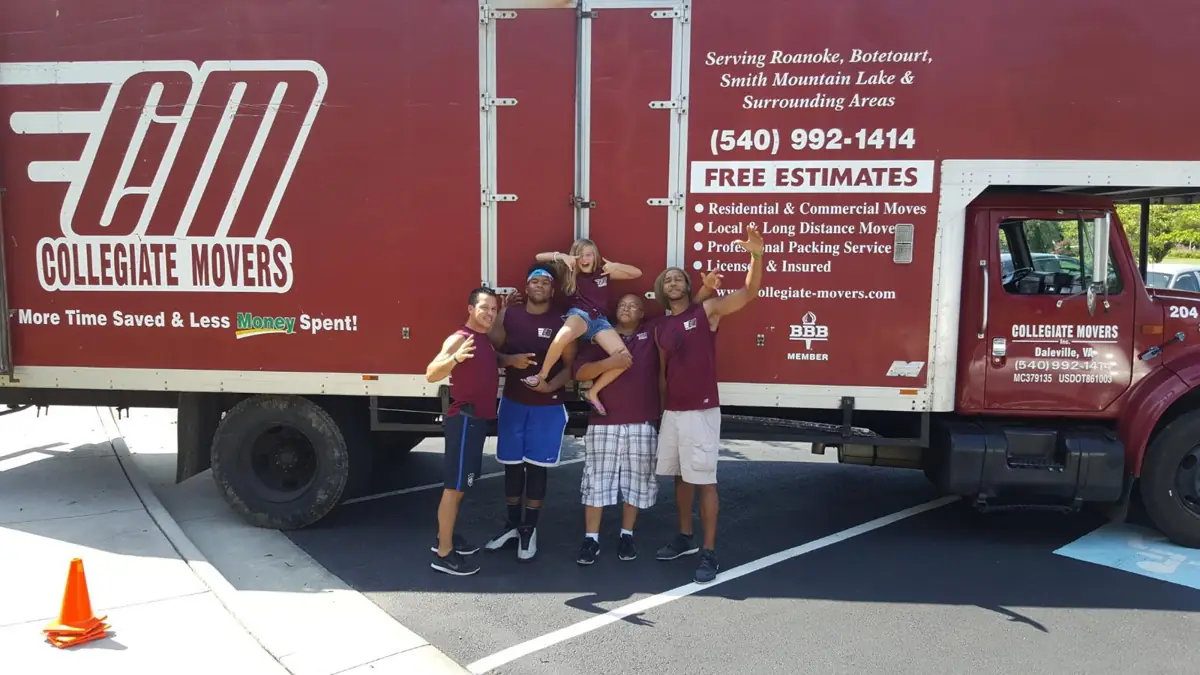
- Local and real: based at 84 Executive Cir in Roanoke, with our own trucks and crews.
- Experience: moving Southwest Virginia families since 1999.
- Written estimates: every move starts with a free written estimate.
- Clear communication: a real phone number, (540) 992-1414, answered Monday to Saturday from 7am to 7pm.
- Reviews: read real customer feedback on our reviews page.
Signs of Great Long Distance Movers During the Estimate
The estimate is your first real look at how a company works. Good long distance movers usually:
- Ask detailed questions about every room, large furniture, stairs, elevators and parking at both homes
- Offer an in-home or video walk-through, or ask for a detailed inventory and photos
- Explain what is included and what could add cost, without pressure to sign on the spot
- Put the estimate, the pickup date and the delivery window in writing
- Answer questions about coverage and claims clearly instead of changing the subject
- Return calls and emails promptly, which is a good preview of communication during the move
If a company rushes you, avoids questions or will not put anything in writing, that tells you how the rest of the move is likely to go.
Understand the Paperwork for an Interstate Move
Reputable long distance movers use clear, complete paperwork. For interstate moves you should expect:
- A written estimate that lists your belongings and services.
- An order for service that confirms the dates, services and estimated charges before the move.
- A bill of lading, the contract between you and the mover, which you receive on moving day. Read it before you sign and keep your copy.
- An inventory of your belongings, with notes on the condition of each item.
- The federal booklet Your Rights and Responsibilities When You Move and information on the mover’s dispute settlement program.
Never sign a blank or incomplete document, and keep copies of everything until your move is complete and any claims are settled.
Long Distance Movers for Roanoke and Southwest Virginia
If you are moving from the Roanoke Valley, a few local details are worth discussing with any long distance movers you consider. Hillside driveways and narrow streets in some neighborhoods affect where a large truck can park. Older homes in areas like Grandin Village and Old Southwest often have tight staircases. Late summer and the end of each month are the busiest times, especially with college moves across the region. A mover that knows the area can plan for all of this before moving day, which keeps your move on schedule.
What to Do After You Choose Your Movers
- Confirm everything in writing. Dates, services, estimate type and coverage.
- Share access details. Tell your movers about stairs, elevators, parking and building rules at both homes.
- Declutter and pack. Every item you do not move lowers your cost.
- Prepare a list of special items. Pianos, antiques, artwork and electronics should be discussed before moving day.
- Keep in touch. Confirm the pickup time a few days before, and share a backup phone contact.
- Plan your own travel. Arrive at your new home before the delivery window begins.
Hiring Long Distance Movers vs. Moving Yourself
Some families consider renting a truck and driving across the country themselves. It can work for a small apartment, but for most homes, hiring long distance movers is safer and often less expensive than it first appears. Before you decide, compare the real costs and risks:
- Truck rental and fuel: large rental trucks use a lot of fuel over long distances, and one-way rentals can be costly.
- Equipment and supplies: dollies, straps, pads and packing materials add up quickly.
- Time off work: loading, driving and unloading a full home can take a week or more.
- Injury risk: heavy furniture and appliances cause many moving injuries.
- Damage risk: without proper padding and load planning, furniture and boxes can shift and break on the highway.
- Lodging and meals: a multi-day drive in a slow truck means hotels and meals along the way.
Professional long distance movers handle the lifting, packing, loading and driving, and they carry the experience to do it safely. Add up the do-it-yourself costs, including your time, and compare them with a few written estimates before you decide.
Frequently Asked Questions
How do I check if long distance movers are legitimate?
Ask for the company’s USDOT number and look it up on the FMCSA website, confirm the business address, read recent reviews on more than one site and make sure you receive a written estimate.
How far in advance should I book long distance movers?
Six to eight weeks ahead is ideal, and earlier for summer or end-of-month moves.
Should I choose the cheapest long distance movers?
Not automatically. Compare what each estimate includes, the type of estimate and the coverage. A price far below other quotes can be a warning sign.
Do long distance movers need a USDOT number?
Movers that transport household goods between states must be registered with the US Department of Transportation and have a USDOT number.
What should I do on delivery day?
Check items against the inventory as they come off the truck, note any damage or missing items on the paperwork before you sign, and keep copies of all documents.
Can long distance movers pack my home too?
Yes. Many long distance movers offer full or partial packing. Professional packing is often worth it on a long move, because boxes need to survive days on the road. Ask what materials are used and whether packing is included in your written estimate. Our guide How to Pack for a Long Distance Move explains what good packing looks like.
What if my move date changes?
Plans change. Ask your movers how far ahead you must tell them about a new date, whether a change affects the price and how they handle a delay at the other end, such as a late closing.
Talk to Our Long Distance Movers
Choosing the right company is the most important decision of any long move. If you are moving from Roanoke, Salem, Vinton, Cave Spring, Bedford, Lynchburg or anywhere in Southwest Virginia, we would be glad to show you how we work. Call (540) 992-1414 or request your free written estimate online. You can also explore our moving services and our local moving company for moves within the Roanoke Valley.