
How to move a piano safely comes down to three things: knowing what kind of piano you have, knowing exactly what stands between it and its new spot, and matching the job to the right people and equipment. A piano is heavy, top-heavy and delicate at once, with hundreds of pounds of wood, cast iron and wire behind a finish that marks easily. This guide from Collegiate Movers, a Roanoke, VA moving company, explains what to assess before moving day, what to photograph, which situations need a professional crew and what to check once the piano is in place.
Already know you want help? See our piano movers in Roanoke, VA, or call (540) 992-1414, Monday to Saturday from 7am to 7pm.
Why Moving a Piano Is Different From Moving Furniture
- Weight: upright pianos often weigh roughly 300 to 800 pounds, and grand pianos commonly weigh 500 to 1,200 pounds or more, depending on size and make.
- Balance: much of an upright’s weight sits high and toward the back, so it tips more easily than its shape suggests.
- Parts that cannot carry weight: legs, lids, pedals and the keyboard area break or loosen if anyone lifts by them.
- Little room for error: doorways, stair turns and landings leave almost no space to adjust once the piano is moving.
The Piano Technicians Guild, the professional association for piano technicians, puts it plainly: use only a professional piano mover, to avoid injury to yourself, your instrument and your home. That is why this guide focuses on planning and preparation rather than on lifting techniques.

Step 1: Identify the Piano Type
The type of piano decides how it is moved, so start here.
- Spinet and console pianos are the smallest uprights, usually under about 44 inches tall.
- Studio and full-size uprights are taller and heavier, often found in schools, churches and older homes.
- Baby grands and grands are measured from the keyboard to the tail. They cannot pass through a normal doorway on their legs, so movers take the legs and pedal lyre off and move the body on its side on a padded piano board.
- Digital pianos and keyboards are far lighter and are usually moved like electronics.
Uprights and grands are handled differently from start to finish. Movers keep an upright standing on a piano dolly, while a grand travels on its straight side, strapped to a board. A plan made for one does not work for the other.
Step 2: Walk the Route and Note Every Obstacle
Before anyone talks about crew size or dates, walk the full path from the piano to the truck, and from the truck to the new room. Note:
- Every step, inside and outside, and whether stairways turn or have landings.
- The narrowest doorway and hallway on the way out and on the way in.
- Thresholds, slopes, gravel, grass or uneven pavers between the door and the street.
- Where a truck can park, and how far that is from the entrance.
- Floors that need protection, such as soft hardwood or vinyl.
In the Roanoke Valley, hillside lots, split-level homes and basement rooms are common, and these details often matter more than the miles between the two homes.
Step 3: Measure and Photograph
Good measurements and a few photos answer most of a mover’s questions before anyone visits.
- The piano: height, width and depth of an upright; the length from keyboard to tail of a grand.
- The tight spots: the width of each doorway and hallway, and the width of any stair turn or landing.
- Photos of the piano from the front and side, with the make visible if you can.
- Photos of each stairway from the top and the bottom.
- Photos of both entrances and the path to where the truck will park.
Write down anything unusual too: a loose leg, a sticking caster, a past repair or an antique case. These change how the piano is handled.
When a Piano Move Needs a Professional Crew
Moving a small digital piano or keyboard is a reasonable job to do yourself. For an acoustic piano, these situations call for an experienced crew with the right equipment:
- Any stairs, inside or outside, especially stairways that turn.
- Any grand or baby grand, which has to be partly taken apart and set on a piano board.
- Any move between buildings, which means loading, securing and unloading a truck.
- Antique, valuable or sentimental pianos, or any piano with known damage.
- Steep driveways, wet or icy walkways, or a long carry to the truck.
- Not having several people who have moved pianos before.
A written checklist, including this one, is not training for carrying a piano down a staircase or taking the legs off a grand. If a route or a piano worries you, ask a professional to look at your photos before anyone lifts it.
How Professional Piano Movers Handle Each Type
Knowing what a crew will do helps you prepare and ask the right questions.
Upright Pianos
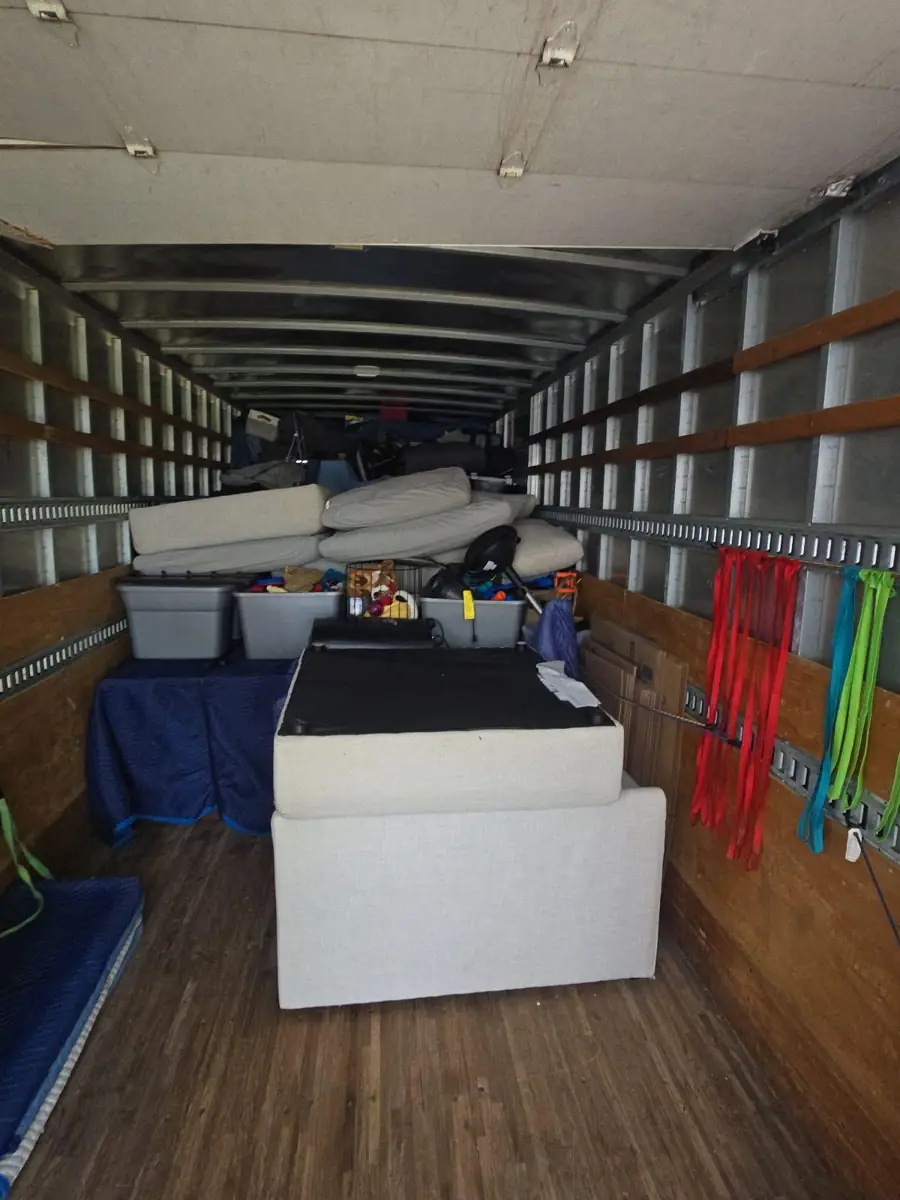
The lid and fallboard are closed, the piano is wrapped in thick pads, and the crew lifts it onto a piano dolly rated for its weight. It stays upright the whole way and rides in the truck against a wall, padded and strapped.
Grand and Baby Grand Pianos
The music desk and pedal lyre are removed and bagged, the piano is lowered onto its straight side on a padded piano board, and the legs come off. The body is wrapped and strapped to the board for the trip, then reassembled and set upright at the new home.
On Stairs
Crews carry a piano one step at a time, with people above and below it and one person calling every move. Railings, walls and corners are padded first. This is the part of a piano move where experience matters most.
Questions to Ask a Piano Mover
- Have you moved this type of piano, and on stairs like mine?
- How many people will come, and what equipment will they bring?
- How will the piano be secured in the truck?
- Is the company licensed and insured? Interstate movers can be checked on the FMCSA’s Protect Your Move site.
- Will the estimate be in writing, and what does it include?
How to Prepare Your Home for the Crew
- Clear everything off the top of the piano and the music desk.
- Close the lid and fallboard, and lock them if there is a key.
- Empty the bench, or box up the sheet music inside it.
- Clear the route, take up loose rugs and move small furniture aside.
- Keep pets and children away from the route while the piano is moving.
- Decide exactly where the piano will stand in the new room, so it is placed once.
- Arrange parking close to the door, and reserve the elevator if your building requires it.
Moving a Piano to Another Room
A piano that is only going across the house still needs the same care, because the hard parts, doorways, turns and stairs, are all still there. A piano moving on the same level through wide doorways is far simpler than one going between floors. Never roll a piano across the floor on its own casters, which on many pianos are not designed to carry it any distance and can mark floors.
Moving a Digital Piano or Keyboard
Digital pianos are the exception that most people can move themselves. Photograph the cable connections, unplug everything, remove the pedals and music rest, and separate the instrument from its stand, keeping the screws in a labeled bag. Wrap it in blankets and follow the manufacturer’s manual on whether to carry it flat or upright. The original box is the best protection if you still have it.
Placing the Piano in Its New Room
The Piano Technicians Guild’s piano care FAQ recommends keeping a piano away from heating and cooling vents and other sources of temperature and humidity extremes, avoiding direct sunlight, and choosing an interior wall over an outside wall if the home is not well insulated. It also notes that keeping humidity around the piano as constant as possible helps it stay in tune longer.
What to Check After Delivery
- Look over the case, legs and lid for marks before the crew leaves.
- Check that a grand’s legs, lyre and pedals are firmly reattached.
- Play every key and try each pedal, listening for sticking keys or buzzing.
- Confirm the piano is level and stable on its casters or cups.
- Note anything that seems different and mention it right away.
Some change in tuning is normal after a move, because the temperature and humidity in the new home are different. Book a qualified piano technician and ask when they recommend tuning; many prefer to let the piano settle for a few weeks first. If keys stick or the action feels different, the technician can check that at the same visit.
What Affects the Cost of Moving a Piano?
The price of a piano move depends on the type and size of the piano, the stairs and access at each end, the carry distance to the truck, the distance between the two addresses and whether it is moving with the rest of a home. A spinet on a ground floor is a much smaller job than a grand going up a turning staircase. Share your measurements and photos when you ask for a written estimate. Our guide How Much Do Movers Cost in Roanoke, VA? explains how moving estimates work.
Moving a Piano With the Rest of Your Home
If the piano is part of a full move, mention it when you book so the crew, equipment and truck space are planned for it from the start. For moves out of the area, our long distance movers carry the piano on the same truck as the rest of your belongings. For other heavy pieces, see our furniture movers.
Frequently Asked Questions
Can I move a piano myself?
A digital piano, yes. For an acoustic piano, the Piano Technicians Guild advises using a professional piano mover, and that advice matters most for stairs, grand pianos and moves that involve a truck.
Can you lay an upright piano on its back to move it?
Professional movers keep uprights standing for the whole move, padded and strapped to the truck wall.
Why are grand pianos moved on their side?
On its legs, a grand is too wide for most doorways and too fragile to roll. With the legs and lyre removed and the body on its straight side on a piano board, it fits through doors and can be secured safely.
What should I send a mover for a piano quote?
The piano type, both addresses, your date, the stairs at each end and photos of the piano and the route.
Do I need to tune my piano after moving it?
Usually, yes. Ask your piano technician when to schedule it; many suggest letting the piano settle in its new room for a few weeks first.
Get Help Moving Your Piano
If your piano needs to go up or down stairs, into a truck or across the valley, Collegiate Movers can help. We have served the Roanoke Valley since 1999 with our own trucks and crews. Call (540) 992-1414, Monday to Saturday from 7am to 7pm, or request your free quote online and mention your piano. Our piano movers page explains how we plan each move.